
Does Work Kill Creativity? Companies Need It More Than Ever in 2026
The tension between structured work and workplace creativity has never been sharper than in 2026. Across Europe, from Warsaw to Copenhagen, employers are openly admitting that they need more innovative thinking from their teams, while simultaneously running operations built on rigid schedules, standardized processes, and compliance-heavy frameworks that leave precious little room for original thought. The question is no longer whether creativity matters. It is whether the modern workplace is actively destroying it.
The Paradox at the Heart of Modern Work
There is something almost contradictory about the current moment. Automation is accelerating across construction, logistics, manufacturing, and administrative sectors. Tasks that once required a human hand are increasingly handled by software or machinery. The logical response from employers should be to double down on what machines cannot replicate, judgment, adaptability, and creative problem-solving. Yet the organizational structures most companies rely on were designed for a different era, one where predictability and compliance were the highest virtues.
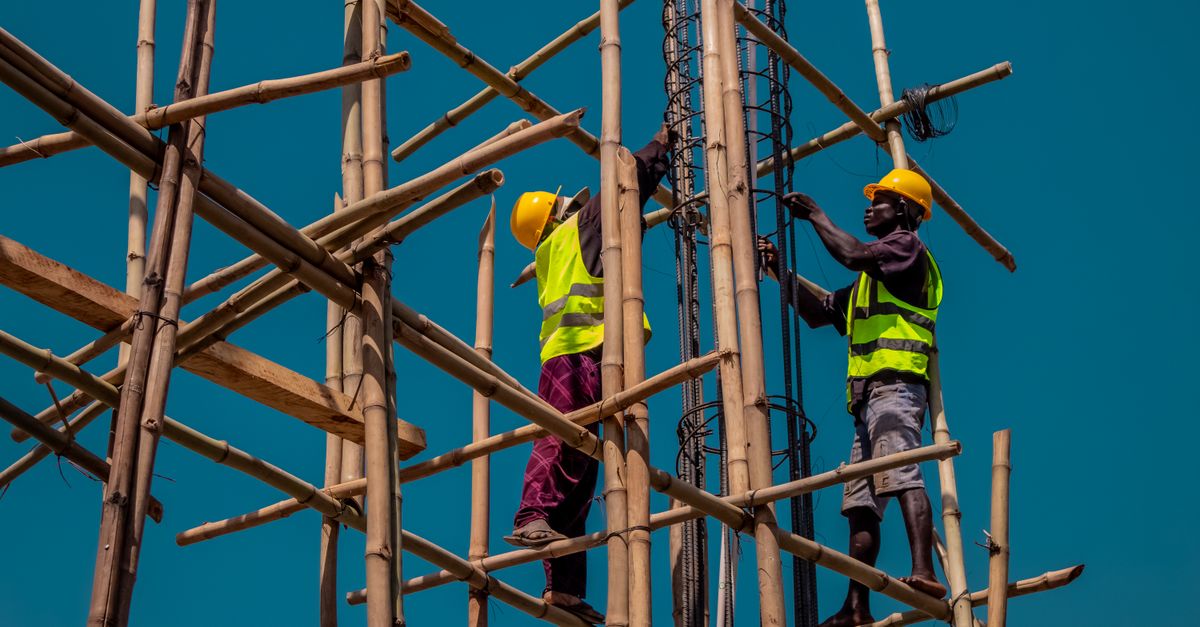
For workers in physically demanding industries, this tension is especially visible. A Polish construction worker arriving in Denmark to work on a large infrastructure project is typically measured by output, hours logged, and adherence to safety protocols. These are not unreasonable expectations. But they leave almost no space for the kind of lateral thinking that might, for instance, flag a smarter sequencing of tasks or a more efficient use of materials. The system rewards execution, not ideation.
Before and After: How Workplaces Have Changed
| Dimension | Traditional Workplace (Pre-2020) | Evolving Workplace (2026) |
|---|---|---|
| Primary performance metric | Hours worked and tasks completed | Output quality and problem-solving contribution |
| Management style | Top-down instruction | Collaborative goal-setting |
| Worker autonomy | Limited, role-defined | Expanding, project-based |
| Attitude toward failure | Penalized | Increasingly tolerated as part of learning |
| Cross-border workforce integration | Administrative focus only | Cultural and creative integration sought |
The shift looks clean on paper. In practice, it is uneven. Larger companies with dedicated HR and innovation departments are moving faster. Smaller contractors and staffing agencies, which form the backbone of cross-border employment between Poland and Denmark, are often still operating on the older model, focused primarily on ensuring workers have the right documentation, from A1 Certificate and RUT registration in order, to complying with Danish time-registration rules under frameworks overseen by Arbejdstilsynet, the Danish Working Environment Authority.
Who Wins and Who Loses in a Creativity-Driven Economy
The winners in this transition are workers who can combine technical skill with adaptability. A carpenter who can also communicate a design flaw to an architect, or a logistics coordinator who spots a routing inefficiency and proposes a fix, becomes genuinely difficult to replace. These workers command stronger negotiating positions, better pay, and longer-term contracts.
The losers, at least in the short term, are workers whose entire professional identity is built around executing a fixed set of tasks with no expectation of contributing ideas. This is not a moral failing, it is a product of how they were trained and the environments they worked in. But as companies increasingly signal that they want more from their workforce than compliance, these workers face pressure to adapt or risk being sidelined.
For Danish employers managing cross-border teams, the creative gap has a cultural dimension too. Polish workers, who make up a significant share of Denmark's construction and industrial labor force, often come from workplace cultures where hierarchy is more pronounced and unsolicited input is less encouraged. This is a generalization, of course, but it shapes how quickly workers feel safe enough to contribute ideas. As staffing agencies compete to attract talent, those offering genuine integration, not just a pay rise, are finding it easier to retain workers who bring both skill and initiative.
The Regulatory Layer: Does Compliance Crowd Out Creativity?
One underappreciated factor in this debate is the weight of regulatory compliance. In Denmark, employers must maintain meticulous records of working hours, a requirement reinforced by EU-level case law following the Court of Justice of the European Union's ruling in the CCOO case, which established that member states must ensure systems for measuring daily working time. The practical effect is that significant management energy goes into documentation, scheduling, and audit readiness. Failing to meet these standards can result in serious consequences, as outlined in guidance on fines for missing time registration in Denmark.
On the Polish side, the Kodeks Pracy (Labour Code) and oversight from PIP (Państwowa Inspekcja Pracy, the National Labour Inspectorate) similarly impose detailed obligations on employers. ZUS, the Polish social insurance institution, adds another layer of reporting requirements for workers posted abroad. None of this is unreasonable from a worker protection standpoint. But the cumulative administrative burden can leave managers with little bandwidth to think about culture, creativity, or long-term team development.
What the International Context Tells Us
The European Commission's ongoing work on the future of work, published through its employment and social affairs directorate, consistently identifies skills adaptability and creative capacity as priorities for the continent's labor market resilience. This is not abstract policy language. It reflects a genuine recognition that Europe's competitive position in a global economy increasingly depends on what workers can imagine, not just what they can execute.
Countries like Denmark, which already rank highly on workplace autonomy and trust-based management in comparative European surveys, are arguably better positioned to make this transition. Poland, while producing a highly educated and technically skilled workforce, still has structural work to do in building workplace cultures where creativity is systematically encouraged rather than occasionally tolerated.
Practical Steps for Workers and Employers
For workers, the most actionable move is to treat every job as an opportunity to observe, not just perform. Document inefficiencies you notice. Propose solutions, even informally. Build language skills that allow you to communicate ideas across cultural and linguistic barriers, in a Danish workplace, being able to articulate a suggestion in Danish or clear English is itself a form of creative capital.
For employers and managers, the shift starts with how performance is defined. If the only metrics on a worker's review are hours and task completion, do not be surprised when that is all you get. Building in even a small structured channel for worker input, a monthly team debrief, an open suggestion process, signals that ideas are welcome. Over time, that signal compounds. The workplaces that will attract and keep the best cross-border talent in 2026 and beyond are those that treat workplace creativity not as a soft perk, but as a core operational priority.